How a Rainy Afternoon Changes the Casino Lobby Experience
A rainy-afternoon casino lobby can turn a brief visit into a longer pause. See how cafés, retail, and hospitality teams can respond without pressuring guests.
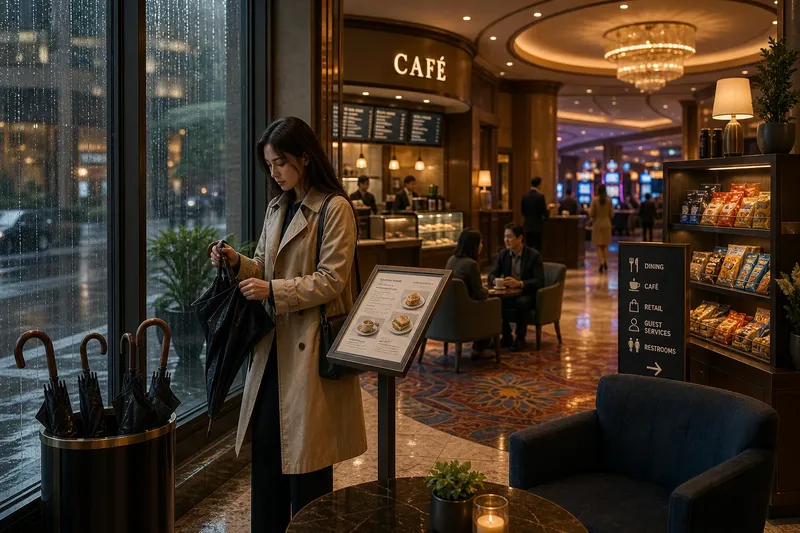
Water beads on a casino’s front windows as a visitor folds a damp umbrella and checks the café menu. On a rainy afternoon, the lobby can become part of the visit rather than a passage through it: guests may wait for companions, look for a warm drink, or browse before deciding where to go. That shift gives hospitality and commerce teams a particular service question: how can the venue meet a longer, less predictable stay without turning every pause into a sales opportunity?
For students of commerce and hospitality at Cao đẳng Công Thương TP.HCM (HIC), casino culture offers a setting in which food, retail, and guest service meet under one roof. The useful focus here is not simply the management of movement, but the quality of the rainy-day offer: what a guest can comfortably do, what staff can explain clearly, and how commercial choices remain voluntary.
What changes during a rainy-afternoon casino visit?
Rain can alter a guest’s plans without changing the venue’s basic services. Someone who expected to walk between destinations may choose to stay inside, order food, or wait until a companion arrives. The team cannot know each person’s reason for staying, so it should make options legible rather than assume intent.
A clear café menu, visible information about dining, and a retail display that can be browsed without an interaction all help guests make their own choices. Hospitality is not only a welcome at the door; it also includes allowing someone to pause without being treated as a likely customer.
How can food and retail feel useful rather than pushy?
Rainy weather makes practical details more noticeable: where to put a wet umbrella, whether a café has a place to sit, and how to find food without asking several staff members. A venue can address those needs with simple signs, a clearly identified umbrella stand where policy permits, and staff who can answer questions without steering the guest toward a purchase.
Retail can contribute through relevant, easy-to-understand choices rather than repeated prompts. For example, a display of packaged snacks near a café may be convenient, while a staff member repeatedly interrupting diners to promote unrelated products can make the same shared setting feel less hospitable. The distinction is like a coat hook by a doorway: it quietly helps, rather than demanding attention.
What should a rainy-day service review check?
A useful review focuses on observable service conditions and the decision each condition calls for. It should follow venue rules and avoid recording guest identities or guessing why someone is there.
- Check whether the entrance has a permitted place for wet umbrellas; if it does, keep it available and clearly indicated, and if it does not, ask the venue’s facilities lead about an approved alternative rather than placing a container in a passage.
- Check whether café hours and menu information are visible from the lobby; if they are, retain the signs, and if they are not, place approved information where guests can read it without blocking access.
- Check whether a guest can tell where café ordering ends and pickup begins; if the two points are unclear, revise the sign or staff explanation, and if they are clear, keep the current arrangement.
- Check whether the available seating is identified for dining or general waiting; if guests cannot tell, clarify the intended use, and if they can, keep the signs and furniture consistent.
- Check whether retail staff can offer help without interrupting people who are eating or waiting; if interruptions occur, review the service approach with the manager, and if they do not, retain the current approach.
- Check whether staff can explain accessible routes and venue services; if answers vary or are uncertain, provide an approved reference for staff, and if answers are consistent, continue using that reference.
How can casino culture shape the service offer?
Casino hospitality often brings several kinds of service together: food and beverage, retail, entertainment, and guest assistance. Each has its own purpose, but the guest experiences them as parts of one venue. On a rainy afternoon, the strongest service response may be a well-timed offer of information, not a promotion.
That distinction matters in commerce education. A transaction is one possible outcome of a good service encounter, not its only measure. A visitor who finds a menu, understands the available choices, and can decline without awkwardness has received useful service even if the visit produces no sale.
What questions do visitors and service teams ask?
Should staff promote food when guests linger indoors?
Staff can make food options easy to find and answer questions when asked, while leaving the decision with the guest. If the venue uses promotions, they should be presented clearly and in keeping with its service policies.
How should a venue handle wet umbrellas?
Use only a location and method approved by the venue, keeping entrances and accessible routes clear. If the approved arrangement is unavailable, staff should direct guests to the venue’s designated alternative rather than improvising in a passage.
What makes a rainy-day retail display helpful?
It should be easy to browse, clearly priced or described according to venue practice, and positioned so it does not interfere with other services. If guests need staff help to understand what is offered, a concise sign or available staff member can provide it without pressure.
How can students study guest experience without intruding?
They can review signs, service descriptions, and approved operating procedures, then observe general service conditions without identifying individuals. Any formal observation should follow the school’s and venue’s rules, especially where casino operations or guest privacy are involved.
How would a fictional rainy-day review reach a decision?
Imagine an invented training scenario at a casino lobby: the café has one order counter, one pickup shelf, and four café tables; the venue’s approved plan assigns a separate stand for wet umbrellas. The student’s task is to review the service information during a rainy shift, not to infer what guests want or to claim a real observation.
The student checks the four concrete inputs: the menu sign, the order counter, the pickup shelf, and the approved umbrella stand. The menu sign is readable from the entrance, the counter and shelf have distinct labels, and the umbrella stand is present. The student records those as observable conditions, without noting who uses them.
Next, the student checks the training brief, which says the café menu must identify available food and drink choices and the umbrella stand must remain in its approved location. In this fictional scenario, the menu sign lists drinks but omits the food choices, while the umbrella stand is in the approved place. The resulting decision is to keep the umbrella arrangement and ask the café manager to update the menu information; the visible check afterward is whether the sign presents both categories of choice.
A rainy-afternoon casino lobby is therefore a useful subject for hospitality and commerce students because it makes the relationship between service and selling easier to examine. The practical standard is simple: give guests clear choices, make ordinary needs easier to meet, and let a quiet pause remain a quiet pause.