From Souvenir Counter to Destination Keepsake
Learn how to choose a destination keepsake that carries a place’s character, suits its use, and tells a more considered story than a generic souvenir.
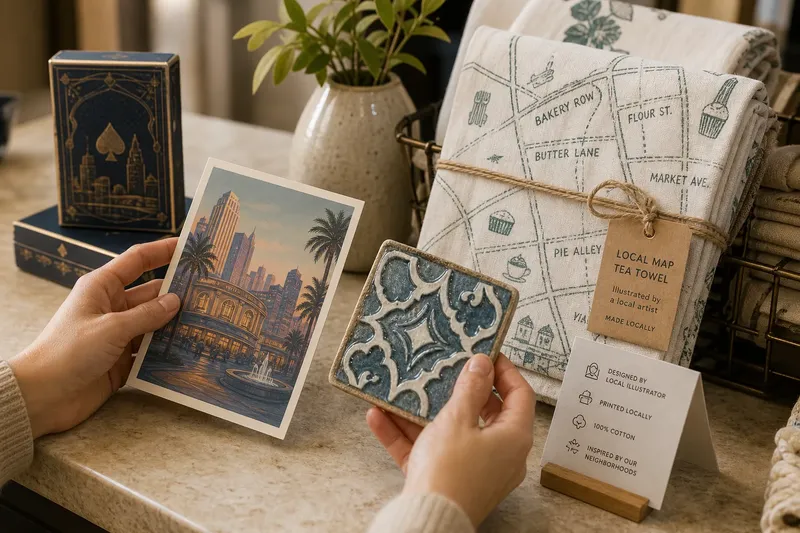
You pause at a casino gift counter with a postcard in one hand and a small, locally made ceramic tile in the other. Both mark the visit, but only one seems to hold something about the place beyond its name. Choosing a destination keepsake begins with noticing that difference.
A souvenir can simply record where you went: a logo, date, or familiar landmark. A keepsake can do that too, while also carrying a detail of local life, design, material, or hospitality. The distinction is not a rule about what deserves to be bought. It is a way to make a more considered choice, whether you are selecting an object for yourself or shaping the merchandise offered at a destination.
What do you want the object to remember?
Start by naming the memory you want to keep. It might be the architecture of a hotel, the feeling of arriving after a long trip, a meal shared with friends, or the distinctive character of a casino’s interior. That memory gives you a clearer filter than asking only whether an item looks attractive.
A branded keychain may record the venue. A locally designed playing-card deck might evoke its entertainment culture, while a small print by an area artist could connect the visit to the surrounding city. Neither is automatically more meaningful; each serves a different memory.
If you work in retail or hospitality, make the distinction visible without telling visitors what they ought to value. Group objects by the story they carry—place, craft, food, entertainment, or venue identity—rather than presenting every item as an equivalent emblem of the destination.
Which details make a place recognizable?
Look for details that belong to the destination rather than to travel retail in general. These might include a local building material, a regional motif, an area food tradition, a phrase used by residents, or a design element drawn from the venue’s history. Specificity is what gives an object a reason to exist beyond its souvenir label.
Casino culture can provide one strand of that identity: the visual language of gaming, the rituals of a lively evening, or the craftsmanship of a room’s furnishings. It need not stand for the entire city. A keepsake can acknowledge the casino as one setting within a broader destination, rather than treating it as a substitute for the place around it.
Ask who made the object and what its materials or design refer to. A concise, accurate note at the counter can explain that connection; vague claims about being “authentic” do little to help a visitor judge what they are buying.
How do you compare a keepsake with a generic souvenir?
Use three questions as you handle the options: Does it point to a recognizable feature of this place? Does its material or design support that connection? Can you imagine using, displaying, or sharing it after the trip? The answers need not all be yes, but they show what kind of reminder an object offers.
A mug with a venue logo may be useful and clear about where it came from. A tea towel printed with a local map may connect everyday use to the wider area. A decorative object may have no practical function yet still carry a strong association. Think of the difference like choosing a bookmark: one can mark the page, while another also reminds you of the bookshop where you found it.
For a retailer, price and convenience are practical considerations, but they do not establish a story. Consider whether the item’s description is specific, whether the maker or origin is represented fairly, and whether the object fits the kind of visitor memory the shop hopes to serve. Follow the product label, maker guidance, and applicable local rules where they determine origin or material claims.
How can you choose a destination keepsake?
What makes a keepsake feel tied to a particular place?
A distinct local reference helps: a neighborhood name, a regional pattern, a building detail, or a collaboration with an area maker. The reference should be clear enough to explain without overstating what the object represents.
Is a logo enough to make an object a keepsake?
A logo can make the venue easy to remember, especially for visitors who value a direct record of their stay. It does not, by itself, explain the destination’s wider character or the object’s materials and origins.
Should a keepsake be useful?
Usefulness can help an object remain part of daily life, but it is not essential. Choose according to the memory you want it to carry and the space you have for it.
How can a shop describe local design responsibly?
Name the maker, place, material, or design reference when those details are known and relevant. Avoid broad claims of local origin if the available product information does not support them.
How do you make the choice in practice?
Imagine you are visiting a casino resort in a city known for its neighborhood bakeries, and you want a gift for a friend who enjoys cooking. At the counter, you see a branded deck of cards and a printed tea towel made in collaboration with a local illustrator, featuring a map of nearby food streets. You decide the towel better fits the friend and the destination, then read its product card to understand the maker and design. The observable result is a gift that can be used in the kitchen and has a concrete place-based story to share.
The choice would be different for someone collecting casino memorabilia or looking for a small, durable token. A playing-card deck may then be the better fit. The point is not to rank the objects, but to match the object’s story with the person who will keep it.
If you are selecting merchandise for a shop, apply the same sequence to the display. First identify the visitor memories the range serves; then separate venue-specific items from locally connected work; finally, make descriptions precise enough for visitors to decide for themselves. A small card beside an object can explain its connection more clearly than an elaborate sales pitch.
What should you check before taking it home?
- Connection: Identify the particular place, maker, or tradition the object refers to; choose another item if the connection is only implied.
- Material: Read the product information and consider whether the material suits how you expect to use or store it.
- Provenance: Check who made it and where that information is available; do not infer local production from a local design alone.
- Use: Decide whether it will be displayed, used, eaten, or given away; let that purpose guide your choice.
- Story: Ask whether you can explain why you chose it in a sentence; if not, look for an item with a clearer connection to your visit.
Food gifts call for a different kind of attention because the memory may be tied to flavor, not only appearance. Consider ingredient information, packaging, and the recipient’s needs, and follow the maker’s storage and handling guidance. A locally named product is not necessarily made locally, so read its description rather than relying on the packaging’s mood.
There is also room for an object that resists a tidy story. A plain postcard bought during a quiet hour, a casino chip kept as a memento, or a simple item chosen because it made you laugh may carry personal meaning without representing the destination as a whole. A good keepsake does not need to speak for everyone who lives there.
When you search for a destination keepsake, look beyond the counter’s most prominent display. The strongest choice may be the one whose materials, maker, or design connect your own memory to a real detail of the place, while leaving room for the destination to mean something different to someone else.